
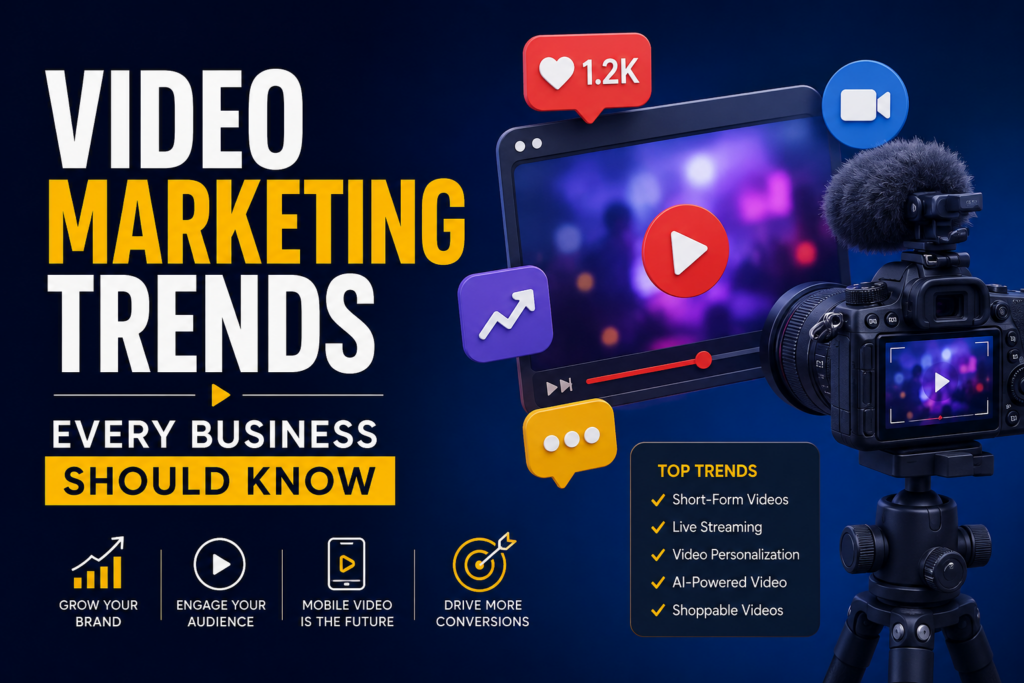
Video marketing has become one of the most powerful digital marketing strategies for businesses of all sizes. With billions of users watching videos every day across social media, websites, and streaming platforms, brands that invest in video content are seeing higher engagement, better customer trust, and increased conversions.
In 2026, video marketing is no longer just about creating promotional videos. Consumers expect authentic, interactive, personalized, and valuable content that educates and entertains. Businesses that keep up with the latest trends can build stronger relationships with their audience and outperform competitors.
Let’s explore the most important video marketing trends every business should know.
Why Video Marketing Matters
Video content captures attention faster than text or images. It helps businesses explain products, showcase services, build credibility, and encourage customers to take action.
Benefits of Video Marketing
- Increases website engagement
- Improves SEO rankings
- Builds customer trust
- Boosts conversion rates
- Enhances social media performance
- Generates more qualified leads
- Strengthens brand awareness
1. Short-Form Videos Continue to Dominate
Short videos remain the most popular content format across digital platforms. Audiences prefer quick, engaging videos that deliver value within seconds.
Businesses should focus on creating:
- Product highlights
- Tips and tutorials
- Behind-the-scenes content
- Customer testimonials
- Quick industry insights
- Company updates
Short-form videos work exceptionally well because they match modern viewing habits and are highly shareable.
2. AI-Powered Video Creation
Artificial Intelligence is changing how businesses create video content.
AI tools can now help with:
- Script writing
- Voice generation
- Automatic subtitles
- Video editing
- Background removal
- Content translation
- Thumbnail creation
AI allows businesses to produce high-quality videos faster while reducing production costs.
3. Personalized Video Marketing
Customers appreciate content tailored to their interests.
Businesses are increasingly using personalized videos for:
- Welcome messages
- Product recommendations
- Customer onboarding
- Email campaigns
- Sales follow-ups
- Special promotions
Personalized videos improve customer engagement and create stronger connections.
4. Interactive Videos
Interactive videos encourage viewers to participate instead of simply watching.
Examples include:
- Clickable products
- Polls
- Quizzes
- Choose-your-own-path videos
- Interactive tutorials
- Shopping links
Interactive content increases watch time and improves conversions.
5. Live Video Streaming
Live video continues to be an effective way to connect with audiences in real time.
Businesses can use live streaming for:
- Product launches
- Webinars
- Q&A sessions
- Company announcements
- Events
- Workshops
- Behind-the-scenes tours
Live videos build authenticity and encourage direct interaction.
6. User-Generated Video Content
Customers trust other customers more than traditional advertisements.
Encourage your audience to create videos featuring:
- Product reviews
- Testimonials
- Unboxing experiences
- Success stories
- Before-and-after results
User-generated content increases credibility while reducing content creation costs.
7. Educational Video Content
Consumers search online to solve problems before making purchasing decisions.
Educational videos can include:
- How-to guides
- Tutorials
- Industry tips
- Frequently asked questions
- Product demonstrations
- Expert advice
Helpful content positions your business as a trusted authority.
8. Mobile-First Video Strategy
Most videos are now watched on smartphones.
To improve the mobile viewing experience:
- Use vertical or square formats
- Add subtitles
- Keep videos concise
- Use clear visuals
- Capture attention in the first few seconds
- Optimize loading speed
Mobile optimization ensures your content reaches the largest possible audience.
9. Video SEO Becomes More Important
Creating videos is only part of the strategy. Optimizing them for search engines helps increase visibility.
Video SEO best practices include:
- Using keyword-rich titles
- Writing detailed descriptions
- Adding captions
- Including transcripts
- Optimizing thumbnails
- Using structured data
- Embedding videos on relevant pages
Proper optimization can improve rankings on both search engines and video platforms.
10. Storytelling Over Traditional Advertising
Modern audiences prefer authentic stories rather than direct sales pitches.
Businesses should focus on storytelling through:
- Customer success stories
- Brand journeys
- Employee experiences
- Community involvement
- Company values
- Real-life case studies
Story-driven videos create emotional connections that encourage long-term customer loyalty.
Best Practices for Successful Video Marketing
To maximize results:
- Define clear goals before creating videos.
- Understand your target audience.
- Invest in good audio and lighting.
- Include captions for accessibility.
- Maintain consistent branding.
- Add a strong call-to-action.
- Repurpose videos across multiple platforms.
- Analyze performance metrics and improve future content.
Common Video Marketing Mistakes
Avoid these common errors:
- Creating videos without a strategy
- Ignoring audience preferences
- Poor sound quality
- Videos that are too long
- No captions
- Weak thumbnails
- Inconsistent posting
- Forgetting calls-to-action
- Not measuring results
Future of Video Marketing
Video marketing will continue evolving with advancements in AI, immersive technologies, and personalized experiences. Businesses that embrace innovation and consistently produce valuable content will be better positioned to attract, engage, and retain customers.
Whether you’re a startup, small business, or established enterprise, investing in video marketing today can drive long-term growth and strengthen your online presence.
Conclusion
Video marketing is no longer optional—it’s a core component of a successful digital marketing strategy. From short-form videos and AI-powered editing to personalized content and live streaming, staying ahead of these trends can help businesses connect with audiences, improve engagement, and increase conversions.
By focusing on high-quality, audience-centric content and continuously adapting to new technologies, your business can build stronger relationships, enhance brand visibility, and achieve sustainable growth in 2026 and beyond.